


Robôs sociais em escolas e hospitais

Área principal: Science & Technology
Áreas secundárias: Education | Health & Well-being
Nível: B1
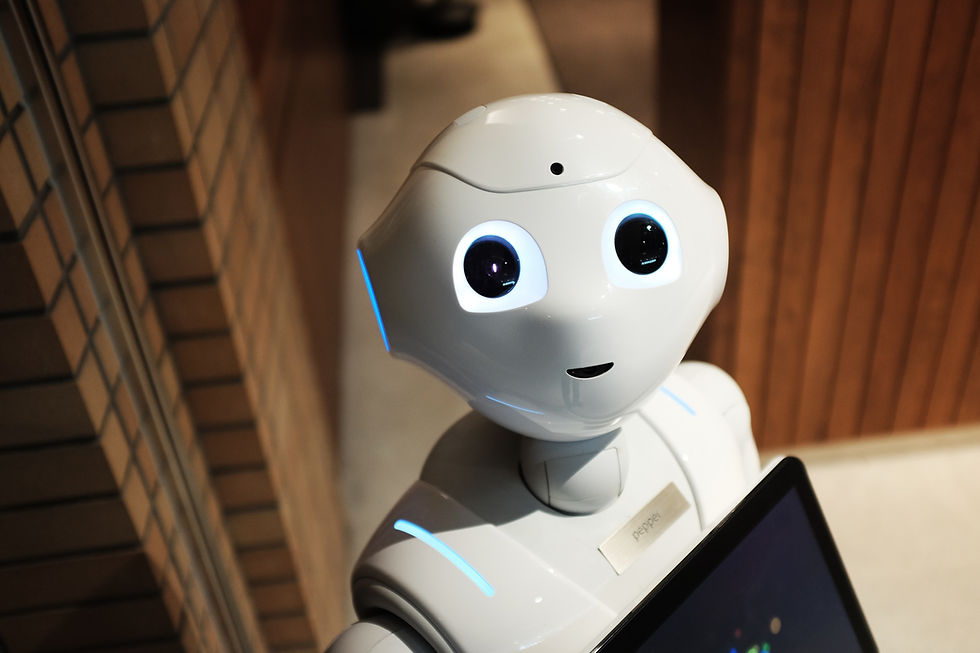
Robôs sociais em escolas e hospitais
Can Social Robots Help Students and Patients?
Robôs capazes de falar, gesticular e responder a pessoas já vêm sendo testados em escolas e ambientes de saúde. Pesquisas recentes sugerem aplicações promissoras, mas também mostram que seu papel precisa ser cuidadosamente definido.
Contexto
Um social robot não é simplesmente uma máquina industrial que executa tarefas físicas. Ele é projetado para interagir socialmente com pessoas por meio de voz, movimento, gestos ou outras formas de comunicação.
Em 2026, revisões científicas mostraram que esses robôs vêm sendo estudados em educação para atividades como aprendizagem de idiomas e matemática. Uma meta-análise envolvendo 146 estudos encontrou benefícios de aprendizagem em várias situações, mas apresentou um resultado especialmente importante: robôs utilizados como apoio ou coensino mostraram resultados mais positivos do que robôs utilizados para substituir professores. Na saúde, pesquisas também investigam seu uso no apoio a crianças hospitalizadas e em outras formas de cuidado.
READING TEXT IN ENGLISH
Can Social Robots Help Students and Patients?
Imagine entering a classroom and seeing a small robot talking to students.
The robot asks questions, makes gestures and helps children practise a new language.
Now imagine another robot in a hospital.
It tells stories, plays games and interacts with a child who is preparing for a medical procedure.
These situations are no longer only science fiction.
Researchers are studying social robots in education and healthcare.
Social robots are machines designed to interact with people through communication and social behaviour.
In education, robots have been tested in areas such as language learning, mathematics and other cognitive skills.
A large meta-analysis published in 2026 examined 146 studies involving physical social robots and learning. Overall, the researchers found positive learning effects in several situations. However, an especially interesting result appeared when researchers considered the robot's role.
Robots used in a co-teaching role showed stronger results.
When robots were used to replace the human teacher, the analysis found no learning advantage.
This distinction is important.
A robot might provide additional practice, repeat an activity many times or create an interactive learning experience.
But teachers do much more.
They understand classroom relationships, respond to unexpected situations and make complex educational judgments.
Social robots are also being studied in healthcare.
A 2025 systematic review and meta-analysis examined their use with hospitalized children experiencing pain, stress or anxiety. The robots could interact through activities such as stories, songs and playful communication.
A 2026 observational study also examined the experience of hospitalized children, caregivers and healthcare workers interacting with a social robot, reflecting continued research into how this technology might fit into real clinical environments.
These robots may therefore become useful tools.
But an important question remains:
Should a social robot replace human interaction — or support it?
Current research suggests that this distinction matters.
Key Idea
A ideia central não é perguntar simplesmente se robôs são “bons” ou “ruins”.
É perguntar:
What role should the robot have?
Na educação, evidências recentes sugerem diferenças importantes entre um robô utilizado junto ao professor e um robô utilizado no lugar do professor. Uma meta-análise de 2026 encontrou resultados positivos especialmente quando o robô atuava em coensino, enquanto a substituição do professor não apresentou benefício global.
Na saúde, os resultados também precisam ser interpretados com cautela: há potencial para apoio, interação e redução de sofrimento em determinados contextos, mas pesquisadores continuam estudando eficácia, implementação, aceitação e limitações.
A tecnologia pode ser mais interessante quando amplia capacidades humanas, e não quando simplesmente tenta eliminar pessoas do processo.
General & Academic Vocabulary
1. Social robot
Significado: robô social
Definition: A robot designed to interact socially with people.
Example: The students practised vocabulary with a social robot.
2. Interaction
Significado: interação
Definition: Communication or activity between people or things.
Collocation: human-robot interaction
Example: Researchers studied human-robot interaction.
3. Healthcare
Significado: cuidados/serviços de saúde
Definition: Services related to maintaining or improving health.
Example: Robots are being studied in healthcare environments.
4. Patient
Significado: paciente
Definition: A person receiving medical care.
Example: The robot interacted with young patients.
5. Hospitalized
Significado: hospitalizado
Definition: Receiving treatment in a hospital.
Example: The study included hospitalized children.
6. Co-teaching
Significado: coensino
Definition: Teaching in cooperation with another teacher or system.
Example: The robot was used in a co-teaching role.
7. Learning outcome
Significado: resultado de aprendizagem
Definition: A measurable result of a learning activity.
Example: Researchers compared learning outcomes.
8. Anxiety
Significado: ansiedade
Definition: A feeling of worry or nervousness.
Example: Hospital procedures can cause anxiety in children.
9. Evidence
Significado: evidência
Definition: Information used to support a conclusion.
Example: Researchers examined evidence from many studies.
10. Replace
Significado: substituir
Definition: To take the place of someone or something.
Example: Technology should not automatically replace teachers.
11. Support
Significado: apoiar
Definition: To help someone or something.
Example: Robots may support classroom activities.
12. Implementation
Significado: implementação
Definition: The process of putting a system into practical use.
Example: Researchers are studying barriers to robot implementation.
Language Focus
Support vs. Replace
Estas duas palavras representam uma distinção importante neste tema.
SUPPORT
The robot supports the teacher.
O professor continua responsável pelo processo.
REPLACE
The robot replaces the teacher.
O robô passa a desempenhar a função no lugar da pessoa.
Compare:
AI can support medical professionals.
com:
AI can replace medical professionals.
As frases possuem implicações muito diferentes.
Em textos acadêmicos, escolher o verbo correto é essencial para não exagerar resultados de pesquisa.
Check Your Understanding
What is a social robot?
In which educational areas have social robots been studied?
What did the 2026 meta-analysis find about robots used in co-teaching?
How can social robots interact with hospitalized children?
What important question does the article raise about the role of robots?
Critical Thinking
Which activities should a robot be allowed to perform in a classroom, and which should remain primarily human?
Would you feel comfortable interacting with a social robot in a hospital? Why or why not?
Mini Academic Task
Support or Replace?
Escreva entre 120 e 150 palavras:
Should social robots support professionals or replace some of their tasks?
Escolha:
education;
healthcare;
or both.
Inclua:
One possible benefit is...
However...
Research suggests...
In my view...
Therefore...
Não trate a questão apenas como “technology is good” ou “technology is bad”. Apresente pelo menos um benefício e uma limitação.
Answer Guide
1. A robot designed to interact socially with people.
2. Areas including language learning, mathematics and other cognitive learning activities.
3. Robots used in co-teaching roles showed stronger positive learning effects than robots used as replacements for human teachers.
4. Through activities such as talking, playing, telling stories, making jokes or singing.
5. Whether robots should replace human interaction or primarily support it.
Sources
A Systematic Literature Review and Mapping of Human-Robot Interaction in Educational Contexts — Humanities and Social Sciences Communications — February 2026.
Social Robots: A Meta-Analysis of Learning Outcomes — Frontiers in Robotics and AI — 2026 — analysis of 146 studies.
The Use of Social Robots in Primary School to Support Children's Academic and Social Emotional Learning — Clinical Child and Family Psychology Review — 2026.
Effectiveness of Social Robots in Improving Psychological Well-Being of Hospitalised Children — Journal of Pediatric Nursing — 2025.
Impact of a Social Robot on Hospitalized Children, Caregivers, and Health Care Staff — JMIR Pediatrics and Parenting — July 10, 2026.
Develop your English through science, technology, culture and ideas with LevX General & Academics.


Comentários